When the product doesn't exist, we build it
Portable network kits in hard cases, a bell controller for a historic church, a media wall built into the wall itself. If your building has a problem nobody sells a box for, bring it to us.
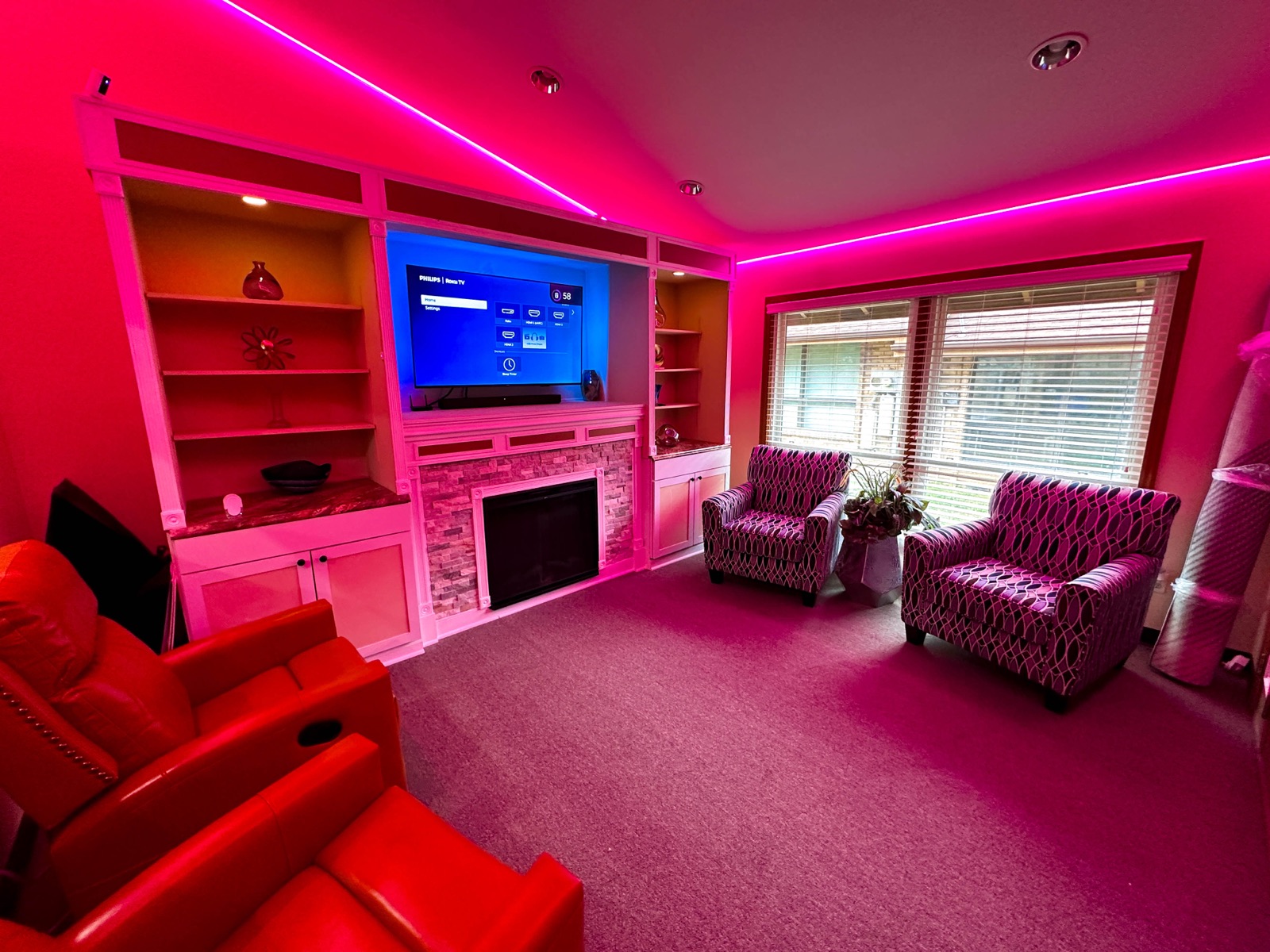 Color-Tunable Media Room
 Most of what we do is design and install. Some jobs need something more: hardware that has to travel, a control system nobody makes anymore, or an install that has to disappear into the architecture. These are a few of those.
- 01 Custom Rooms Built-in media walls · 7 photos
- 02 Custom Lighting Accent and color-tunable · 9 photos
- 03 Network In A Box Portable build · a conference network in a case · 4 photos
- 04 TechHero Case Portable build · rapid-deployment WiFi for site surveys · 6 photos
- 05 Stagebox Portable build · wireless mics, console, and stage video in one rack · 2 photos
- 06 Custom Control Systems When nobody makes the box · 4 photos
Custom Rooms
Whole rooms we build end to end: trim, paint, panels, wiring, speakers, and the display, finished as one piece of work.
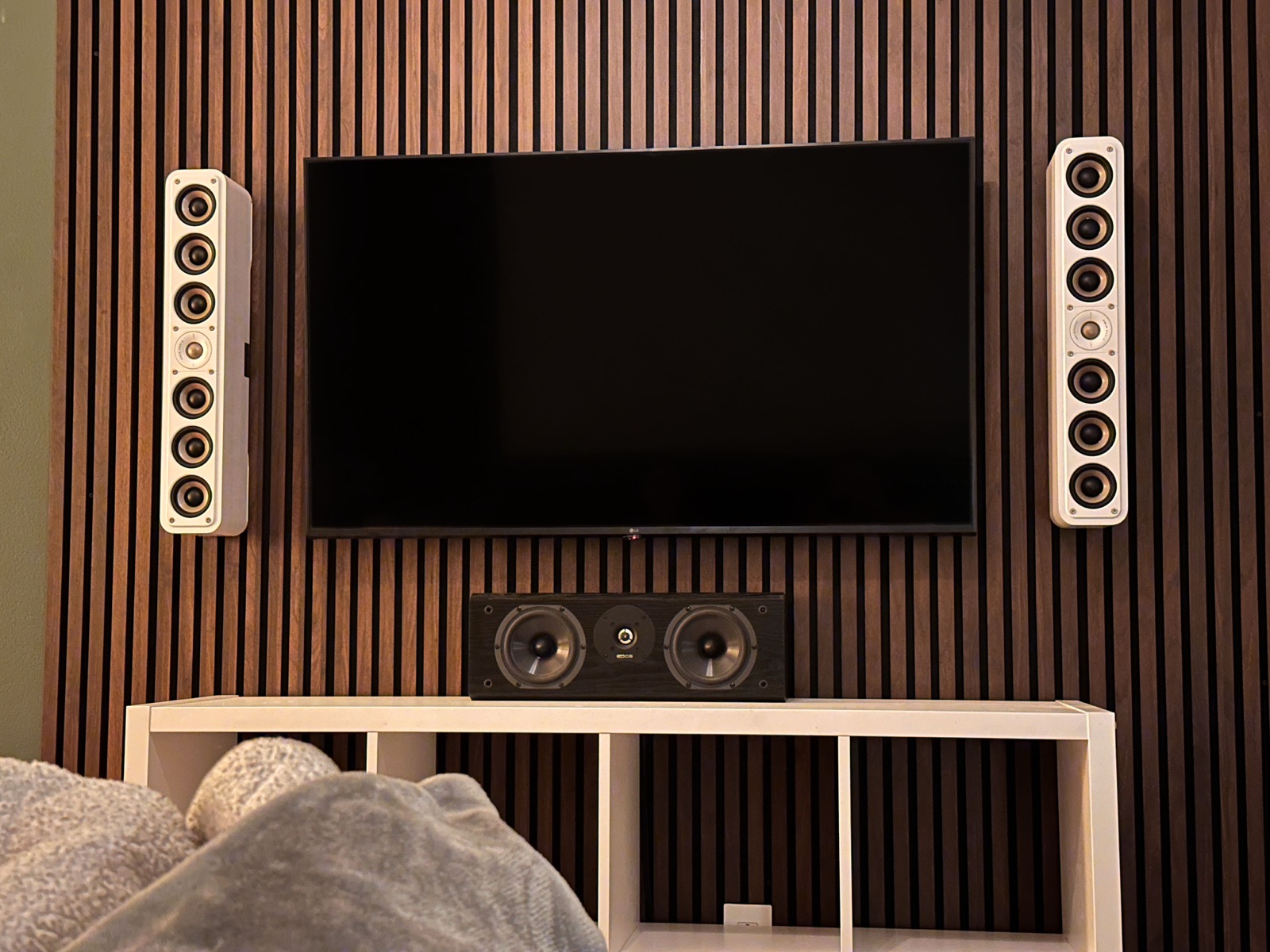
The green room with the wood slat wall is ours from the studs out. We did the trim and crown, the wall paint, the wallpaper, the slat panels, the in-wall speakers and center channel, the TV mount and all the wiring behind it, and we hung the solid wood door.
Building the room and the system together is why it looks like this. Slats are cut around the speakers, the mount lands on blocking we put there, and the outlets sit dead flush with the wall. By the time the TV goes on there is nothing to see but the room itself: no brackets, no cable tails, no plates standing proud.
Hire it as one job and nobody points at anybody else. The receiver lives in a closet, the room runs from one remote, and the finish carpentry and the technology were planned at the same time.
From Whole-Home Audio & Video.
Custom Lighting
Accent lighting built into cabinetry, full-room color scenes, and a TV that throws matching color onto the wall behind it.
Lighting is the part people notice last and love most. We run low-voltage LED into the cabinetry itself, hidden along shelf edges and cabinet tops, so the glow reads as part of the millwork rather than a strip stuck on afterward.
At room scale we install color-tunable LED around the ceiling line and program scenes for it: warm and low for a movie, bright white for cleaning, team colors for a game. One tap on the panel, and the whole room changes.
The TV in that room runs ambient backlighting that reads what is on screen and throws matching color onto the wall behind it, so the picture spills past the bezel. Paired with the ceiling scenes, the whole room follows whatever is playing.
From Whole-Home Audio & Video and Color-Tunable Media Room.
Network In A Box
A portable UniFi network with its own application server and 5G backup: guest WiFi, captive portals, a separate AV network, and event control that survives a laptop crash.
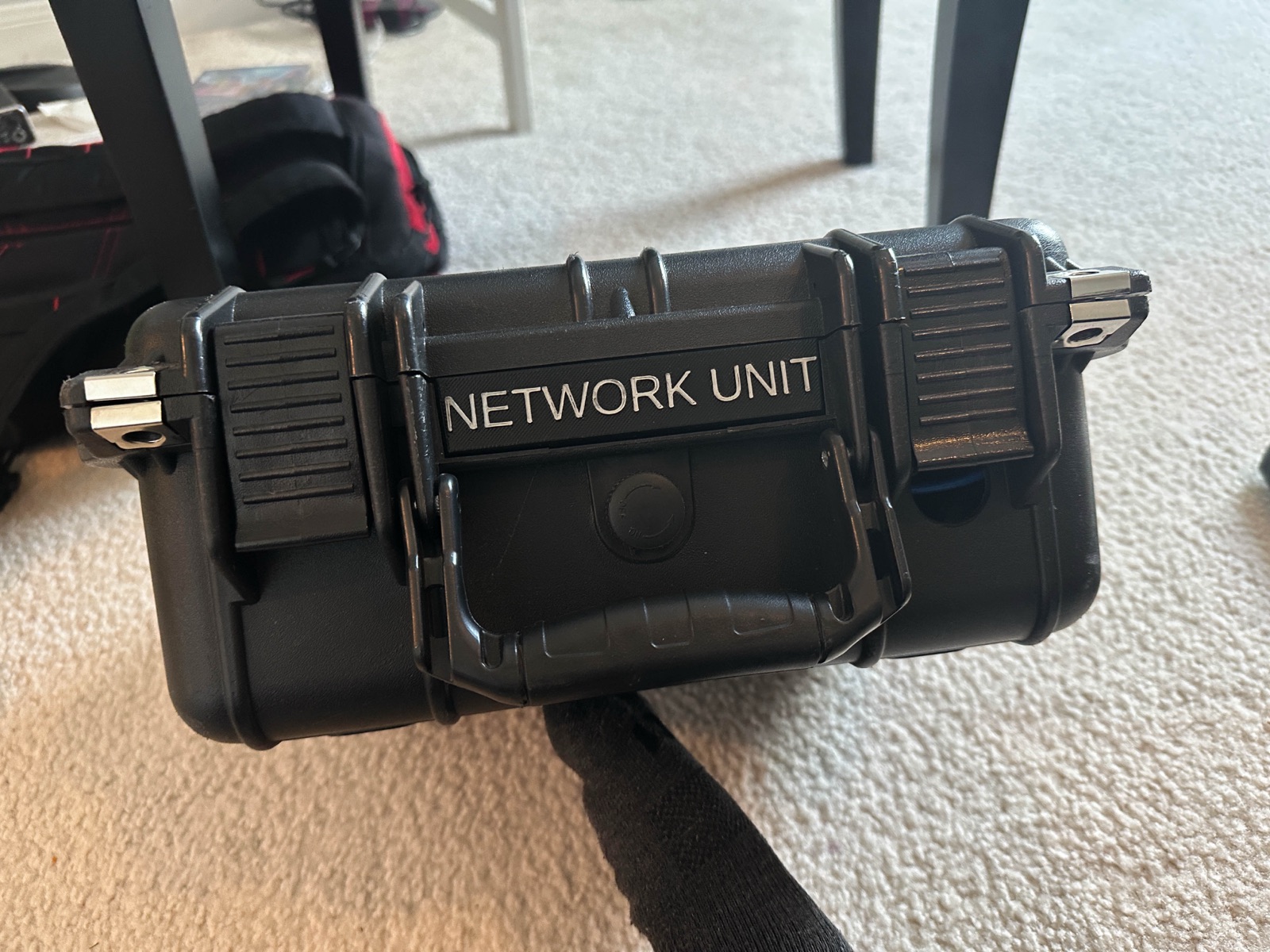
This is everything a conference needs to run, in a form factor one person can carry. Inside is a full UniFi stack, so guest networks, VLANs, and services get configured the same way we configure a building, from a controller we already know.
Event WiFi is the visible part. Because it is UniFi, spinning up a guest network for an event, complete with a custom captive portal for the client, takes minutes rather than a rebuild. Alongside it runs a separate AV network for the company hardware, so show traffic and guest traffic never share a lane.
The part that saves shows is the application server built into the case. It runs Bitfocus Companion, so the control surface for the event lives on hardware we own rather than on somebody's laptop. When a computer crashes mid-event, the main control panel keeps running.
A 5G hotspot is built in as well. It backs up unstable venue internet and carries the whole thing on its own for off-grid productions, so the event does not hinge on whatever the building happens to have.
Connections are made for the road: locking etherCON ports on the front panel, a dedicated WAN input for whatever the venue hands you, and locking trueONE power in so the cord cannot be pulled out mid-show.
From Portable Network & Stage Kits.
TechHero Case
A two-case hotspot kit for WiFi contractors: the antenna case goes outside, the main case stays inside, and the technician keeps a stable connection to a remote engineer.
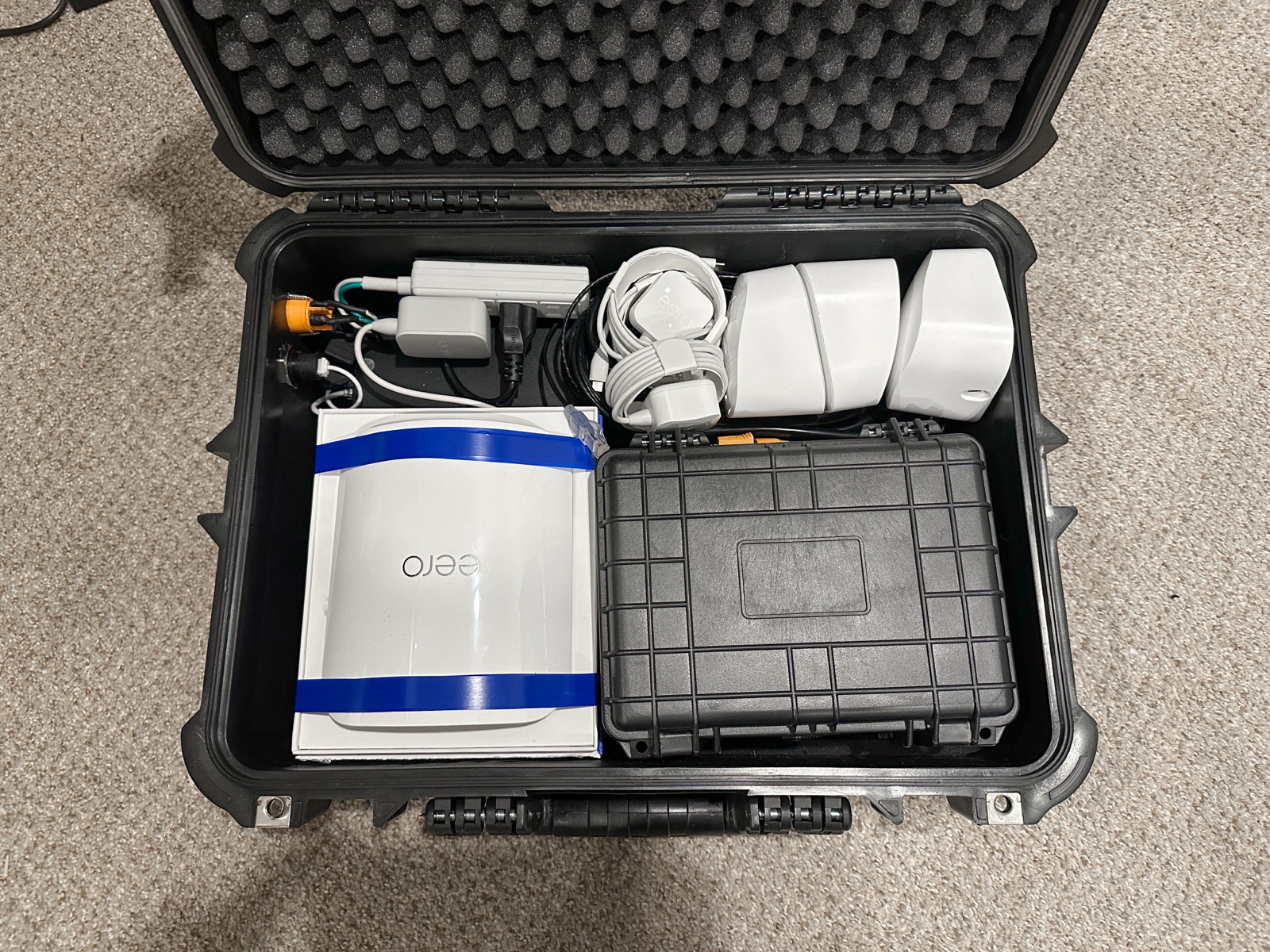
The ask was specific: "we want a hotspot we can use for having technicians do site surveys with remote engineers in areas where the WiFi isn't great." The contractor's crews were losing their own connection in exactly the houses they were being paid to fix.
The answer is a two-piece rapid-deployment kit. The main case takes power on a locking trueONE connector and runs a single thin ethernet cable out to the hotspot case, which we power over that same cable with a custom PoE arrangement. The hotspot case is weather sealed, so it can sit out in the rain all day without anyone thinking about it. It gets set outside where the cell signal is, the main case stays in the house with the technician, and one skinny cable is the only thing running through the door.
Inside the house, that gives a technician a stable connection for a full site survey and a live call with a remote engineer, even before a single access point is installed.
The kit also carries three mini eero units for plug-in range extension, so a large home can be covered in minutes without pulling anything. Everything packs back into the main case, so it travels as one piece and deploys in seconds.
From Portable Network & Stage Kits.
Stagebox
A stage rack carrying wireless microphone channels, console inputs, a hidden Dante path to a computer, an NDI decoder for the stage display, and an amp for the front monitors.
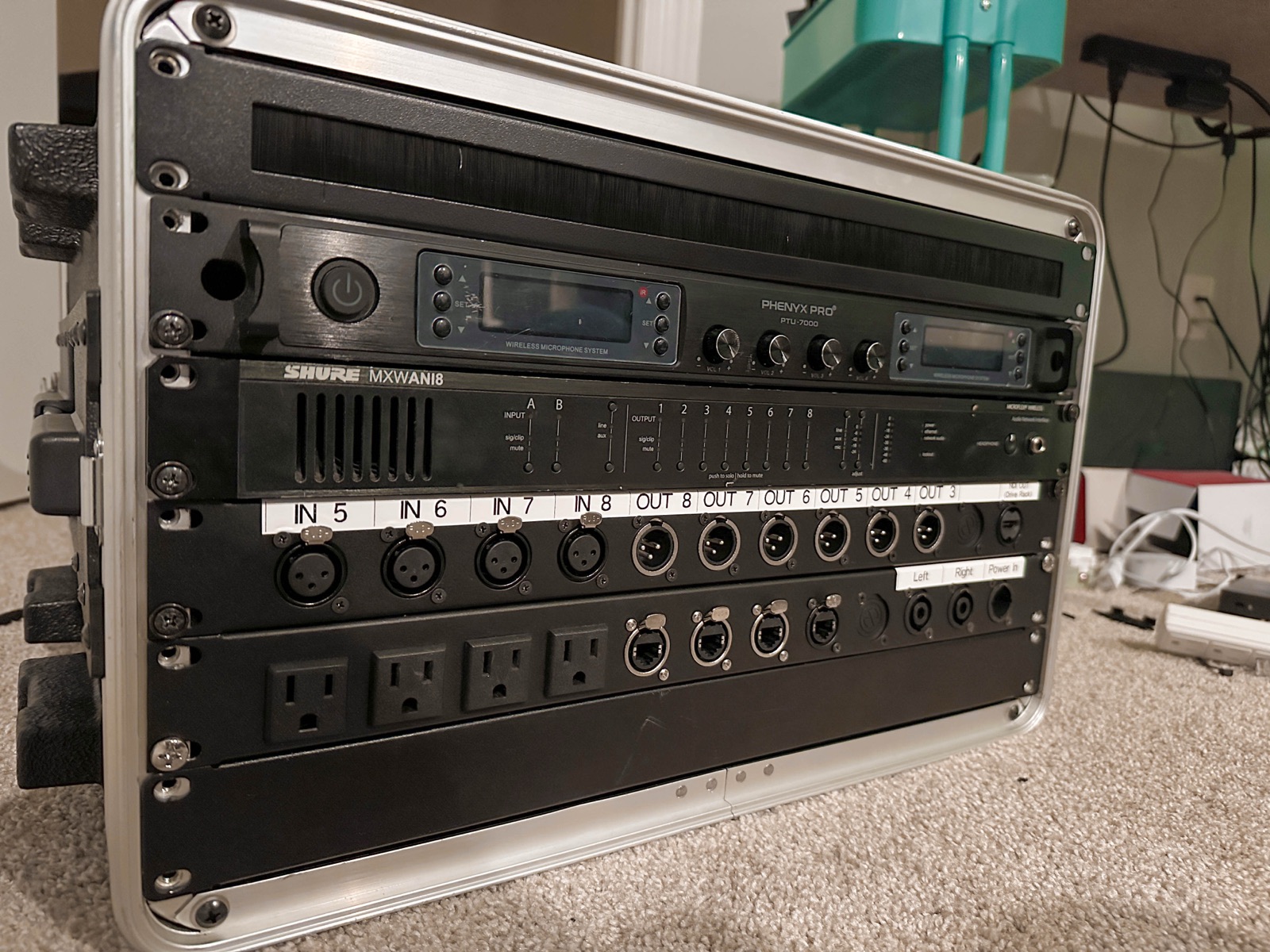
The ask was a single stage rack that could run an entire service or event: several channels of wireless microphones, inputs to the audio console, and a way to send audio straight to a computer for recording and streaming.
Audio rides Dante. The Dante rack and its interface are mounted inside the case, out of sight, carrying the wireless microphone channels on the network instead of on a snake, so the same signal reaches the console and the computer with no extra runs. Outputs are driven by the Shure output box, so what leaves the rack is clean and consistent.
Video shares the same network. An NDI decoder in the rack pulls content off the network and drives a stage display or TV, so presenters get their content on stage without a dedicated video run.
On the front panel, network connections land on locking etherCON jacks, which survive being kicked, rolled over, and re-patched every week. An amplifier is built in to drive the passive front monitor speakers, so the rack feeds the stage without a separate amp rack.
Everything lands on one labeled panel. Roll it in, plug in power and a network uplink, and the stage is live.
From Portable Network & Stage Kits.
Custom Control Systems
A carillon player built from a Mac mini, a bell library, and software we wrote: scheduling, live playback, amp control, and a watchdog that keeps it running on its own.
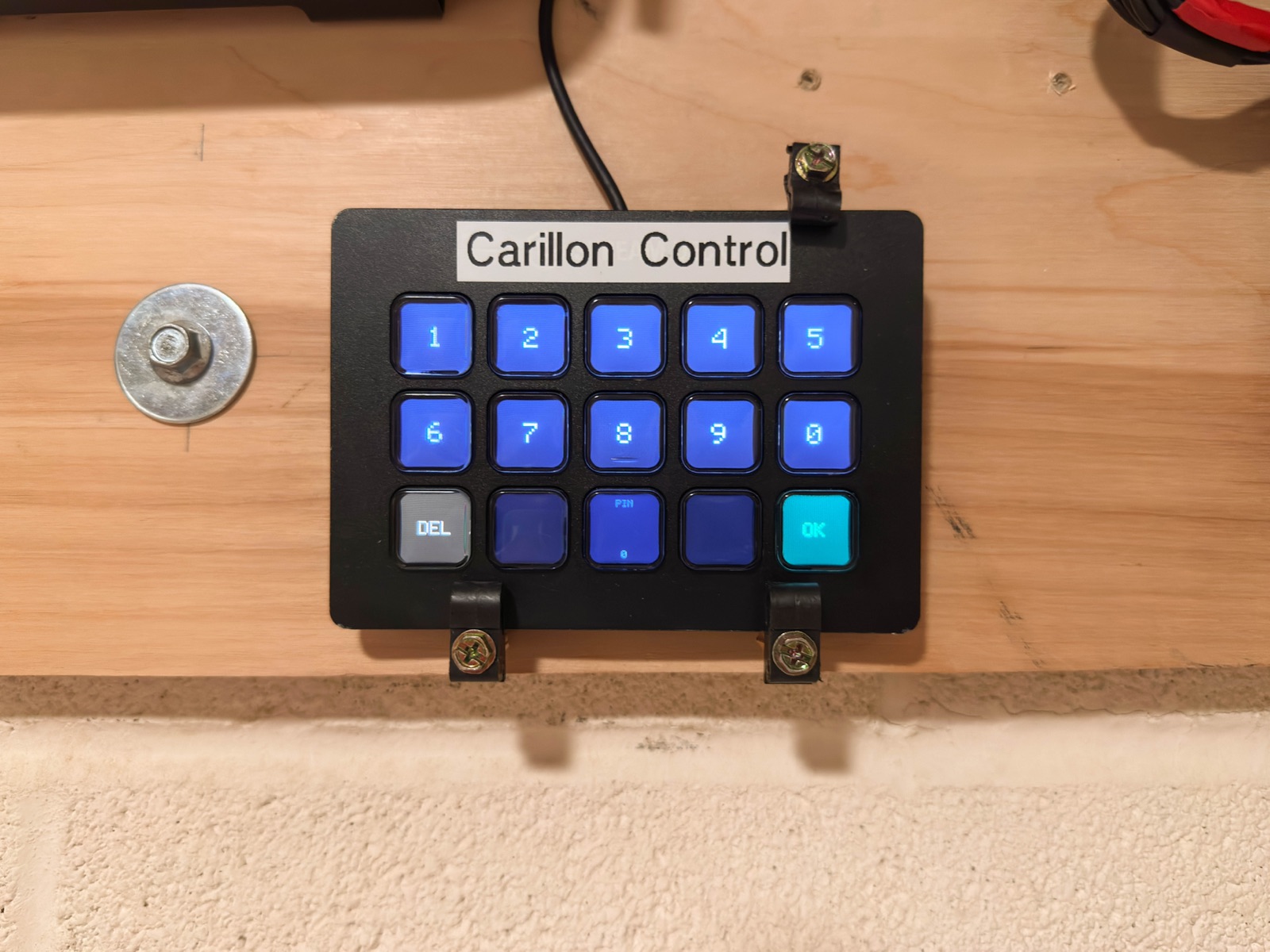
The old carillon controller was failing and nobody makes a replacement, so we built one. It runs on a Mac mini with a library of bell recordings and custom software for scheduling, programming, and playback.
The web interface is the whole control room. It has a library browser, a hot pad for playing bells live during special events, a playlist and schedule builder for hymns and hourly chimes, and power control for the amplifier so it is not sitting on all week. A full watchdog supervises everything, so the tower keeps ringing without anyone logging in to nurse it.
For the people who actually run services, there is a Stream Deck handler with a PIN lockout: ushers get tactile buttons for the cues they need, and nothing else can be touched by accident.
One more thing that says a lot about how these jobs go. On the day we deployed it, we found the church amplifier was dead, and we were in the middle of nowhere. The only remotely technical store around was a small Best Buy, so we drove out, bought a car stereo amplifier and an ATX computer power supply, and wired them together to drive the bells. The tower rang that day, and we came back with the permanent amplifier.
From Carillon Control System.
Have an odd problem?
Describe it. If it is something we can build, we will tell you what it would take.